preloader

History & Milestones

The story of ESE is one of continuity, evolution, and expansion. The department inherits a long and respected tradition in electronics at IISc, while also actively reshaping itself to respond to the changing landscape of the field. As electronics expanded beyond conventional boundaries—into semiconductors, systems, intelligence, healthcare, security, and quantum technologies—the department too broadened its ambitions, its faculty strengths, and its institutional role.
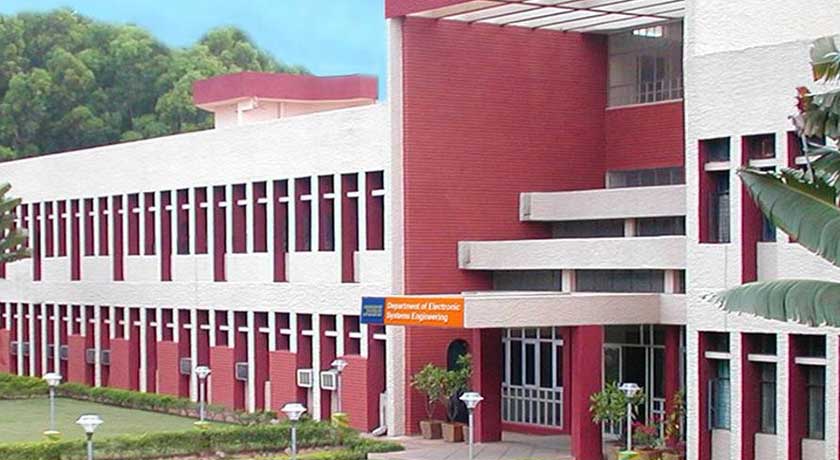
While the deeper historical arc of the department will continue to be refined through archival work and the ESE (& CEDT) History Committee, the recent trajectory is already clear. Over the last decade, ESE has expanded from a strong academic department into a broader capability platform with growing national relevance. It has built new research laboratories, entered multiple emerging domains, deepened industry engagement, expanded student numbers, and taken on roles in mission-scale programs that extend well beyond conventional departmental boundaries.

Period Selected Milestones
Legacy to transition phase Growth from the department’s earlier identity in electronics and training-oriented systems engineering toward a broader research-led role in devices, circuits, systems, and applications.
2013–2020 Expansion of faculty strengths in semiconductors, security, healthcare systems, networking, data storage, quantum information, and embedded systems; establishment of multiple new labs and stronger industrial collaborations.
2016 onwards Rise of major semiconductor, GaN, 2D-materials, and ESD-related activities; stronger engagement with national programs and industrial technology development.
2020 onwards Acceleration of work in quantum technologies, secure hardware, AI systems, neuromorphic platforms, and cyber-physical systems; increased translational ambition across multiple labs.
2023–2025 Further strengthening of department-wide capability in quantum technologies, secure and efficient computing, healthcare electronics, and future semiconductor platforms; expansion of skilling, strategic, and national initiatives.
August 2025 onwards A deliberate department-level effort begins to reshape ESE’s systems, teaching culture, student frameworks, research culture, public identity, admissions outreach, alumni rebuilding, committee-led governance, and long-horizon mission positioning.
2025–2035 vision phase ESE articulates a future defined by three overarching thrusts—Quantum, Semiconductor & VLSI, and AI & Intelligent Systems—supported by mission programs such as the 2D Innovation Hub, ASTRA, secure electronics, intelligent healthcare systems, and future computing initiatives.